|
|||||||||||||||||||||||||||||||||||||||||||||||||||||||||||||||||||||||||||||||||||||||||||||||||||||
 |
|||||||||||||||||||||||||||||||||||||||||||||||||||||||||||||||||||||||||||||||||||||||||||||||||||||
 |
|||||||||||||||||||||||||||||||||||||||||||||||||||||||||||||||||||||||||||||||||||||||||||||||||||||
The Present and Imperfect Progressive
Although it’s not really a “tense” in its own right, we occasionally use a verb form known as the “progressive.” Progressive verb forms indicate that an action is ongoing or currently taking place. Progressives require a form of the verb “to be” and what’s known as a “present participle.” In English, a present participle is a verb form ending in “-ing.” I am studying. In this example we see the two components we need: “am” is a form of “to be” and “studying” is the present participle. What about Spanish? Read on: Present ParticiplesNote: Do not confuse present participles we use in progressive forms (like hablando and corriendo) with the past participles we use in perfect tenses (like hablado and corrido). Let’s looks at present participles first. Whereas in English we form present participles by using “-ing” endings, in Spanish we will add “-ando” to the stem of “-ar” verbs and “-iendo” to the stem of both “-er” and “-ir” verbs.
There are (always) some exceptions, however… Spelling ChangesNote: By the way, the present participle of ir is “yendo.” If we follow the normal present participle procedure, certain verbs are going to be difficult to pronounce. Take “leer” for example. When we add “-iendo” to the stem, “le-,” we end up with “leiendo.” It’s hard to know how to say this word because there are three vowels in the middle of it. To fix the three vowel problem, we take the “i” and replace it with a “y”: “leyendo.” This makes the word easier to pronounce. Most “-er” or “-ir” verbs whose stem ends in a vowel will require an “i → y” spelling change. Some common examples:
Note: The same is true of “-quir” verbs: relinquir → relinquiendo. An exception to the spelling change rule are “-guir” verbs. Take “distinguir.” While the stem does end in a vowel (“distingu-”), here the “u” is not actually being pronounced. Its sole purpose is to keep the “g” from being pronounced like an “h” due to the vowel following it. Because of that, even though there are three vowels in a row, a spelling change is not necessary.
Another spelling change to consider is when the stem of an “-er” or “-ir” verb ends in “-ñ.” The “ñ” already has a “y” sound built-in, so to speak, so adding “-iendo” isn’t really necessary. You can get away with just “-endo.”
Stem Changing “-ir” VerbsNote: This only applies to verbs that are both stem changing
and There is one other issue with present participles and that occurs with stem changing “-ir” verbs. In addition to the “o→ue,” “e→ie,” and “e→i” stem changes in their present tense conjugations, these verbs have stem changes in their present participle forms. They will either have an “o→u” stem change, or an “e→i” stem change. Some examples:
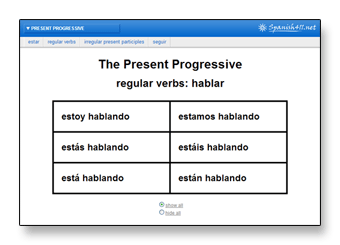
We’ve only talked about half of the equation so far, we still need to discuss the “to be.” In Spanish, in all of our progressive forms, we’ll be using the verb estar. Which tense should we use? That depends on what type of progressive form we want to use. The Present ProgressiveIf the action we’re referring to is happening now (in the present), we use the present progressive. To form the present progressive, simply use a present tense conjugation of estar with a present participle:
Note: To form a negative negative, place the no in front of the form of estar: No estoy comiendo. For example: Estoy
comiendo. Estás
leyendo. Ellos
están mirando la televisión. It’s worth noting at this point that if you have an object pronoun of any sort (reflexive, direct, or indirect), you have two options as to where to put it. You may either put it in front of your conjugation of estar, or you may attach it to the end of your present participle. (Attaching an object pronoun will require adding an accent mark to preserve the original stress.) Either way is perfectly acceptable and your sentence will mean exactly the same thing.
Note: You cannot place the object pronoun in between estar and the present participle.  Let’s practice! Conjugate present progressive verbs on ¡Practiquemos! Important NoteWhile in English we will often use the present progressive to refer to future events, we cannot do the same in Spanish. In Spanish, the present progressive is strictly used to talk about actions that are occurring at a particular point in time. To refer to actions about to occur, we can either use the present tense, the future tense, or the future progressive. ¿Cuándo
sales tú?
Saldré
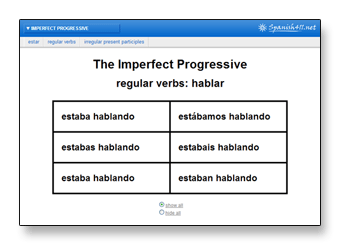
a las tres de la tarde. Estaré saliendo a las tres de la tarde. The Imperfect ProgressiveIf we want to refer to an action that was happening (at some point in the past), we use the imperfect progressive. As the name would imply, this time we’ll use an imperfect tense conjugation of estar with a present participle:
For example: Ellos
estaban estudiando. Nosotros
estábamos practicando futbol. Ella
le estaba mintiendo a la maestra. Let’s practice! Conjugate imperfect progressive verbs on ¡Practiquemos! Other Verbs Used with Present ParticiplesMost of the time estar is used in progressive situations, but not always. There are some other verbs you can combine with a present participle too. Your choice of verb will subtly change the meaning of the sentence. Seguir + Present ParticipleSwitch estar with seguir (or continuar) if you want to stress the action is a continuation of an action that began in the past. A good way to translate this is to include the word “still”: Sus sobrinas siguen jugando baloncesto. Ircania sigue estudiando biología en la universidad. Ir + Present ParticipleChange estar into ir to emphasize the action is progressing slowly but surely. Enrique va mejorando cada día. Mis hijas van aprendiendo italiano. Andar + Present ParticipleUse andar instead of estar to indicate that the action is pointless or not very productive. Normally andar means “to walk,” but in this context a better translation is “to go around”: Camila anda gritando tu nombre. Ellos andan diciendo mentiras. Other Progressive TensesWhile the present and imperfect progressive forms are the most common, we’re not limited to the present and the past. We can form progressives with any tense, such as the future, the conditional, or even the subjunctive. Estaremos
conduciendo. Yo
estaría durmiendo. Espero
que tú estés divirtiéndote. The Preterite ProgressiveSee also: Using the Imperfect and the Preterite It may sound like an oxymoron, but there is also a “Preterite Progressive.” The difference between the imperfect progressive and the preterite progressive is much the same as the difference between the imperfect and the preterite — a definitive time frame. Using the preterite progressive also emphasizes that the action was ongoing, but then stopped abruptly when interrupted. The preterite progressive is not very common. Ayer estuvimos practicando hasta que ella vino. Estuve
estudiando hasta que mi hermana llamó. Lo siento. ¿Estuviste
leyendo? |
|||||||||||||||||||||||||||||||||||||||||||||||||||||||||||||||||||||||||||||||||||||||||||||||||||||
 This work by Spanish411.net is licensed under a Creative Commons Attribution-NonCommercial-ShareAlike 4.0 International License. This work by Spanish411.net is licensed under a Creative Commons Attribution-NonCommercial-ShareAlike 4.0 International License. |



 Full Lesson
 At a Glance
 Presentations